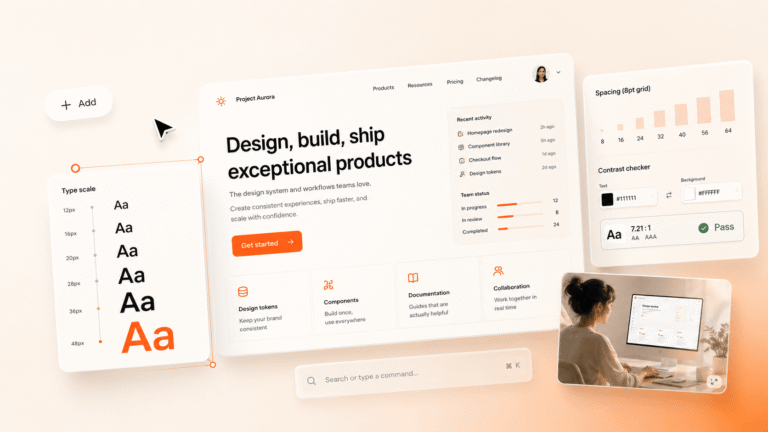
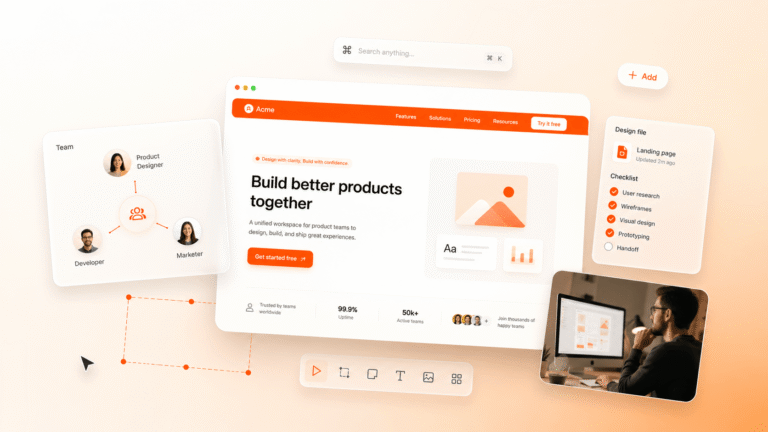
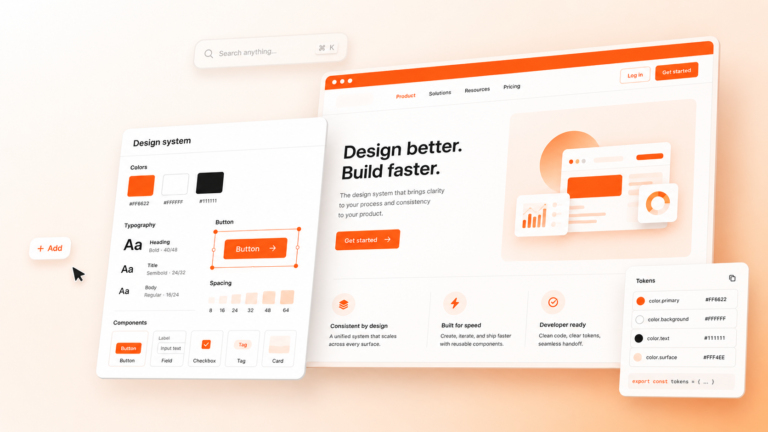
Most brands still think a design system is a folder of components in Figma. Some buttons, some colors, a few cards, done. In 2026, that thinking is going to cost them. This is what a design system really means for your brand now, and what to do about it.
Here is why.
Everyone Has a “Design System.” Most Are Just Figma Libraries
Right now everyone has a “design system.” Open Figma, you will see a page called Components. That is what most teams mean when they say the words. A library. A place where the buttons live.
Then AI happened. And it changed everything about design.
AI Made Design Cheap, and That Changed Everything
Today anyone can generate a screen in seconds. A founder with no design skill can type a prompt and get a full landing page. Design became cheap. Design became fast. That sounds great, but it created a new problem. When everyone can make design, most of that design looks the same, and most of it is average.
So here is the real question for 2026. If anyone can produce design now, what actually protects your brand?
The answer is your design system. But not the folder-of-buttons version. I mean the real one.
What a Design System Really Means for Your Brand in 2026
Your Brand’s Operating System
A design system in 2026 is your brand’s operating system. It is the thing that runs every part of your brand experience, not only the UI. It decides how your product feels, how your marketing site feels, how your emails feel, all from one source of truth. When that source is strong, everything you ship looks like you. When it is weak, every new page is a guess.
A Speed and Trust Engine
It is also a speed and trust engine. Speed, because your team stops rebuilding the same button for the hundredth time and ships faster. Trust, because users judge a brand before they read a single word. A consistent brand feels safe. A messy one feels risky. People buy from brands they trust, and trust starts with what they see.
Two Myths About Design Systems, and Why They Are Wrong
Now let me clear up two things people get wrong.
Myth 1: A Design System Is Just a Figma Library
A design system is not just a Figma library. Why? Because a library is where components sleep. A system is the set of rules that decide how those components behave everywhere, in design and in code. Think of it like a recipe. Ten cooks, one recipe, you get the same dish every time. No recipe, you get ten different dishes and one confused customer. The Figma file is not the system. The rules behind it are the system.
Myth 2: A Design System Kills Creativity
A design system does not kill creativity. A lot of designers fear this. They think a system will box them in and make everything boring. I believe the opposite, and I have lived it. When the small decisions are already solved, the spacing, the color, the base button, you stop wasting energy on them. So you spend that energy on the hard part, the real problem you are solving for the user. A system does not remove your creativity. It moves your creativity to where it matters.
A Real Example: The WPManageNinja Design System
I am not saying this from theory. I built and maintain a design system for WPManageNinja, over 120 components used across 14+ products. One team, one system, many products that still feel like one family. That only works because the system is the operating system, not a component dump.
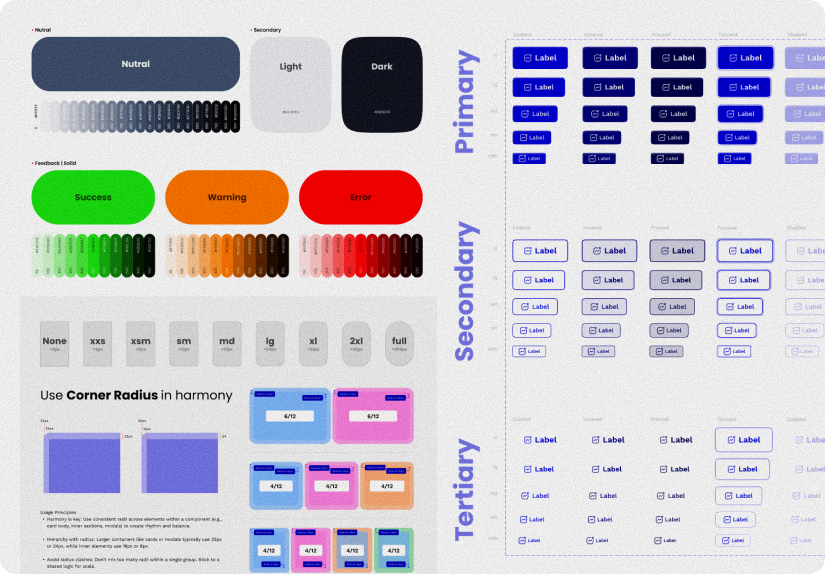
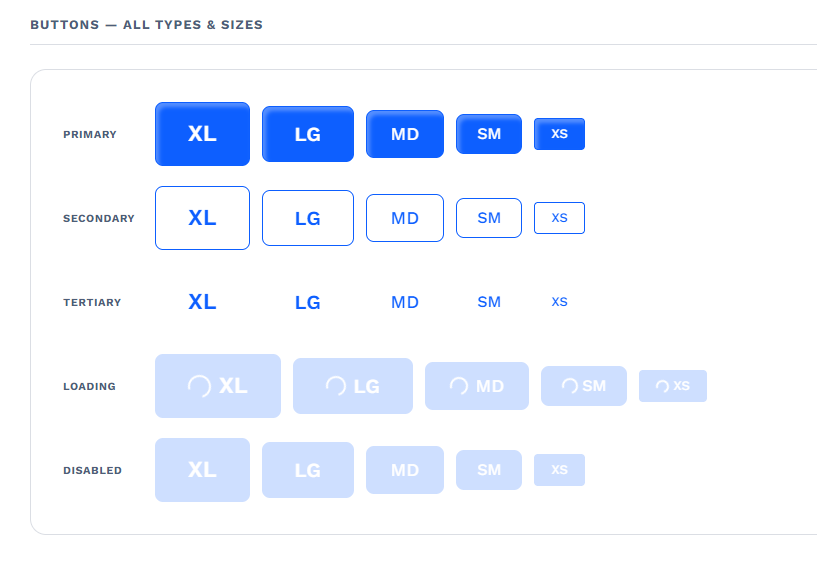
And the part that made it real for the business was taking it out of Figma. We are converting the whole system into HTML and CSS with proper tokens, WCAG 2.2, on GitHub. So the same rules that live in design now live in code. A designer and a developer read from the same source. That is when a design system stops being a nice Figma file and starts being infrastructure your brand runs on.
Why Design Systems Matter More in 2026
This is exactly why it matters more in 2026 than it did five years ago. AI made design cheap. So the design itself is no longer your edge. Anyone can copy a look in an afternoon. What they cannot copy fast is a real system, the rules, the tokens, the consistency across everything you ship. That is your moat now. That is the part that keeps your brand yours while the internet fills up with average AI design.
What You Should Do Now
So what should you actually do?
Stop treating your design system as a side project inside Figma. Treat it as a brand asset, the same way you treat your logo or your product. Write the rules down. Put them in code so design and development share one truth. Build it now, before the flood of average design makes consistency the only thing that stands out.
A design system is not the components. The components are just the words. The system is the language your whole brand speaks. And in 2026, the brands that speak one clear language are the ones people will trust.